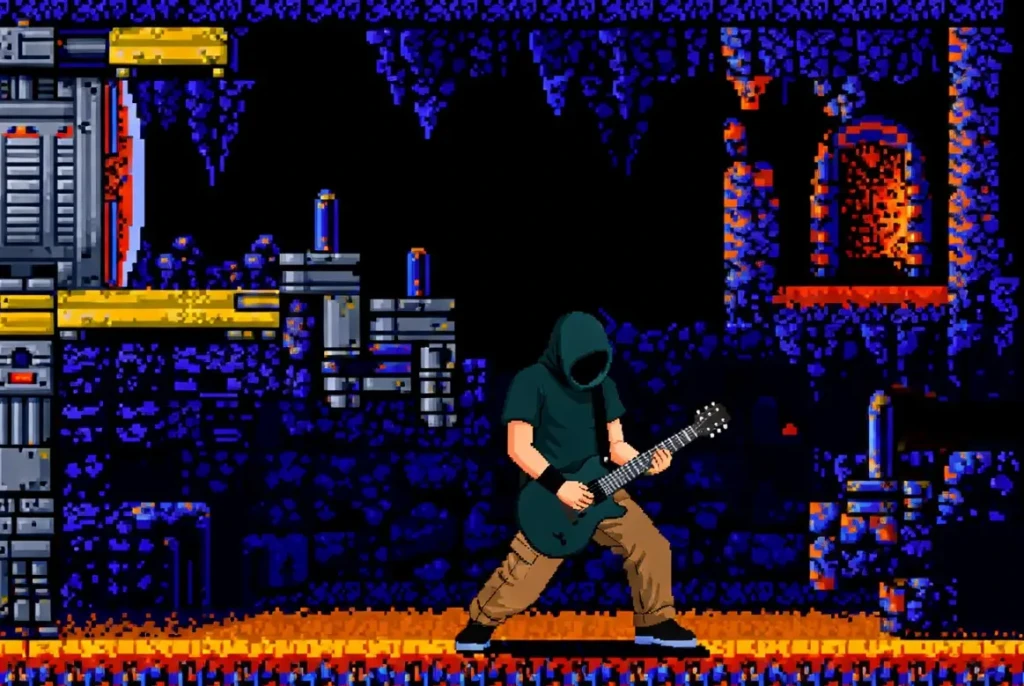
This might sound controversial, but I stand by it.
Video game music has done more for my metal guitar playing than most metal albums ever did.
I am not saying metal albums are bad. I live and breathe metal. But when it comes to developing musical instincts, phrasing, and riff awareness, video game music quietly trains skills that a lot of modern metal ignores.
And the funny part is most guitar players do not even realize it is happening.
Video Game Music Is Written to Be Remembered
Video game music has one job. Stick in your head while you are focused on something else. That forces composers to write melodies and riffs that are clear, intentional, and emotionally direct.
Think about games like Castlevania. Those themes are aggressive, dark, and melodic at the same time. They do not rely on vocals. They do not rely on production tricks. The music has to stand on its own.
That is the same requirement a great metal riff should meet.
This is why translating video game music to guitar feels natural. The structure is already there.
Metal Albums Often Prioritize Sound Over Writing
A lot of modern metal albums sound massive. Perfect timing. Perfect tone. Perfect editing. But many of the riffs are disposable.
They sound good in the moment, then vanish.
Video game music cannot afford that. If a theme is forgettable, the entire atmosphere collapses. That pressure creates stronger writing.
When I play video game music on guitar, I notice how deliberate the note choices are. Nothing feels wasted. Nothing is there just to fill space.
That mindset carries directly into metal riff writing.
Games Train Your Ear Without You Realizing It
When you grow up playing games, you absorb odd time feels, modal shifts, and tension without sitting down to study theory. You learn it subconsciously.
Later, when you pick up a guitar, those instincts show up naturally. Your riffs start moving instead of looping. Your phrasing starts telling a story instead of repeating patterns.
That is something many metal players struggle with. They know techniques, but they do not always know how to shape ideas.
Video game music teaches that shape instinctively.
Why This Translates So Well to Metal Guitar
Metal thrives on atmosphere. So do games. I love crazy weird arrangements like Kraids Lair from Metroid on the NES for Guitar.
Dark modes, unresolved phrases, sudden shifts, and controlled chaos are common in both. That is why video game music adapts so easily into metal guitar arrangements.
When I work on TyrantShredd riffs or covers, especially game-inspired ones, I focus on keeping that sense of movement. Not just heaviness, but direction.
It is the same reason bands like Metallica, Megadeth, and early Sepultura still feel relevant. Their riffs go somewhere.
Video Game Music Forces Musical Discipline
Another reason video game music builds better guitarists is limitation. Older hardware forced composers to work with fewer sounds. That made composition king.
You had to make something memorable with very little.
That discipline is missing in a lot of modern metal writing. Too many layers can hide weak ideas. Video game music does not let you hide.
When I practice or arrange game themes on guitar, it sharpens my sense of what matters. Rhythm. Melody. Intent.
Watch How I Translate Video Game Music to Metal Guitar
I regularly break down video game-inspired riffs and arrangements on my YouTube channel. I show how I adapt themes into metal guitar while keeping their original identity intact.
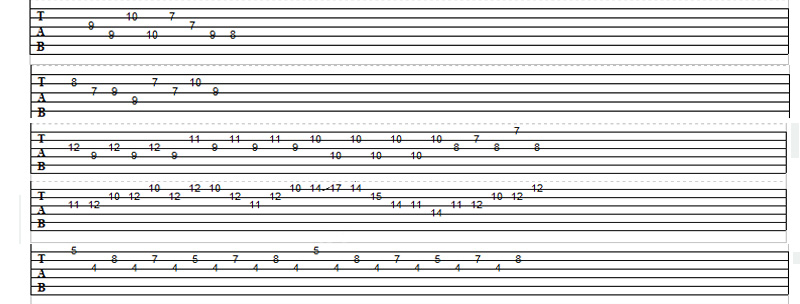
This video in particular shows you how to play Kraids Lair from Metroid on the NES with TAB.
Why I Believe Every Metal Guitarist Should Study Game Music
If you feel stuck playing metal guitar, this is an angle most people never try. Video game music trains your ear, your memory, and your sense of structure in ways that exercises never will.
You do not need to abandon metal. You just need to steal better ideas.
That is exactly what I do.
TyrantShredd is about riffs that mean something. Whether they come from thrash metal or pixelated sound chips, the goal stays the same.
Make the guitar speak.