Few riffs in modern metal have reached the level of notoriety that Bleed by Meshuggah has achieved. Guitarists across the world search for “how to play Bleed Meshuggah on guitar” because the riff has become a benchmark for technical ability, rhythmic precision, and endurance.
Most players approach it the wrong way.
This is not just another metal guitar lesson. This is a breakdown of what actually makes Bleed difficult and how to build the technique required to play it cleanly, consistently, and with control.
What Makes Bleed One of the Hardest Metal Riffs Ever
Many assume Bleed is difficult because of speed. That assumption is incorrect.
The real challenge comes from a combination of factors:
- Continuous alternate picking with no rest
- Repeating patterns that shift perceived accents
- High demand for right-hand efficiency
- Mental fatigue caused by repetition
- Endurance under strict timing control
Unlike traditional thrash metal riffs, Bleed does not rely on bursts of energy. It forces sustained precision. This makes it one of the hardest rhythm guitar riffs in modern metal.
Understanding Meshuggah’s Rhythmic Approach
Meshuggah’s style is based on rhythmic displacement and polyrhythmic phrasing. In simpler terms, the guitar pattern repeats in a way that does not align perfectly with the underlying pulse.
This creates the illusion that the riff is constantly shifting.
Trying to count every note at full speed is not practical. Internalizing the groove is far more effective. The player must feel the pattern rather than calculate it in real time.
That is why many guitarists searching for a Meshuggah guitar lesson struggle. They focus on counting instead of control.
Picking Technique for Bleed
The picking hand is everything in this riff.
Large arm movement will cause early fatigue. Efficient wrist motion is the only sustainable method. The motion must stay tight, controlled, and consistent across all notes.
Focus on:
- Small wrist-driven picking
- Even pick attack
- Minimal distance between strokes
- Relaxed grip to avoid tension
This is where most players fail. They try to force speed instead of building efficiency.
Why Most Guitarists Fail Bleed
A common search is “why is Bleed so hard to play.” The answer is simple.
Most players:
- Use too much movement
- Lose synchronization between hands
- Rush the tempo under pressure
- Practice too fast too early
- Ignore endurance training
Each of these creates breakdown over time. Bleed does not expose mistakes immediately. It exposes them after repetition.
The First Minute Test
There is a clear benchmark for this riff.
If you can play the first minute of Bleed cleanly, without slipping or losing timing, you have already developed the necessary technique.
At that point:
- Your picking technique is efficient
- Your timing is stable
- Your synchronization is working
From there, the challenge shifts to endurance.
This concept is critical and rarely explained properly in most Meshuggah Bleed guitar lessons.
How to Build Speed Without Losing Control
Speed must come after consistency.
Start by practicing at a slower tempo with strict control. Focus on clean execution. Gradually increase speed only when accuracy remains intact.
Key approach:
- Use a metronome
- Increase tempo in small increments
- Stop immediately when the riff becomes sloppy
- Reset and rebuild
This method develops real speed instead of temporary bursts.
Endurance Training for Bleed
Endurance is the final barrier.
Many players can play the riff for 10 seconds. Few can sustain it for a full minute. Even fewer can complete the full song cleanly.
To build endurance:
- Practice in timed intervals
- Focus on relaxation between repetitions
- Avoid unnecessary tension
- Maintain consistent breathing
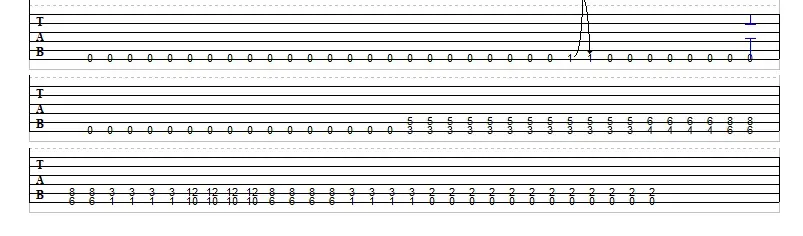
Short, focused sessions are more effective than long, exhausting attempts. Once you can play it for 60 seconds, you have the technique down and it is all about building even more endurance.
Common Technical Mistakes
Recognizing mistakes early accelerates progress.
Frequent issues include:
- Overusing arm instead of wrist
- Picking too aggressively
- Losing rhythmic consistency
- Drifting off tempo
- Tightening up under fatigue
Correcting these habits leads to immediate improvement.
Mental Discipline and Focus
Bleed requires concentration.
Repetition leads to mental fatigue. Once focus drops, timing follows. The hands respond to the mind.
Maintaining attention on the pulse rather than individual notes helps stabilize performance.
Developing mental endurance is just as important as physical technique.
Why Bleed Improves Your Overall Guitar Playing
Working on this riff improves multiple aspects of metal guitar technique:
- Alternate picking accuracy
- Rhythmic precision
- Endurance and stamina
- Hand synchronization
- Control under pressure
This is why many players consider Bleed one of the best exercises for advanced rhythm guitar.
Final Thoughts on How to Play Bleed by Meshuggah on Guitar
Bleed is not just a difficult riff. It is a test of efficiency, discipline, and control.
Most players approach it incorrectly. They chase speed instead of building consistency. They focus on notes instead of rhythm.
Once the technique is developed, the challenge changes completely. Endurance becomes the final step.
Master that, and the riff becomes manageable.
FAQ
How long does it take to learn Bleed on guitar?
It depends on your current picking technique and endurance. Many players take weeks or months to build consistency.
Is Bleed the hardest metal riff?
It is one of the most challenging rhythm guitar riffs due to its endurance and precision requirements.
Do you need advanced technique to play Bleed?
Yes, especially in alternate picking and rhythmic control.
What is the best way to practice Bleed?
Start slow, focus on clean picking, and build endurance gradually.